Ready for telematics to transform your businesss?
telematics helps firms that can get value from monitoring, predicting and facilitating consumer behavior in real time via geospatial or motion-oriented data.
By John Lucker
A quickly advancing technology that was embraced early on by the automobile insurance industry, telematics represents the convergence of geospatial, motion sensing and telecommunications technologies, as well as advanced information processing and high-end computational power. Telematics delivers value through the real-time observational detection and recording of a driver’s actual behaviors and then transmitting the captured data back to a central computational hub for analysis and decision making. Such telematics capabilities for insurance purposes are broadly labeled “Usage Based Insurance” (UBI).
Perhaps you’ve seen ads from several auto insurers promising rate reductions of up to 30 percent for drivers willing to place a telematics device in their car to assess and report on the driver’s habits. In some cases, even if the customer is not a good driver, the insurer offers a nominal discount of around five percent just for installing the device.
his opt-in discount serves as compensation for a consumer to provide their driving data to the insurer for research and data aggregation purposes. Larger discounts are available for drivers who prove their safety and diligence, thus creating a favorable quid-pro-quo for the insurer and customer: less risk + lower claims costs = lower customer premiums and higher insurer profits.
By leveraging telematics technologies and real-time driving behavior, insurers are able to improve the driver risk assessment process because underwriters and actuaries no longer have to rely solely on assumptive correlated data and historical driving records to determine rates. Generally, customers find this new approach inherently fair; insurers see great value in the actual observable cause and effect dynamic of the data; and regulators appreciate both sides of the dynamic as an improvement over hindsight and data proxy-oriented risk assessment.
Expanding Telematics Beyond Insurance
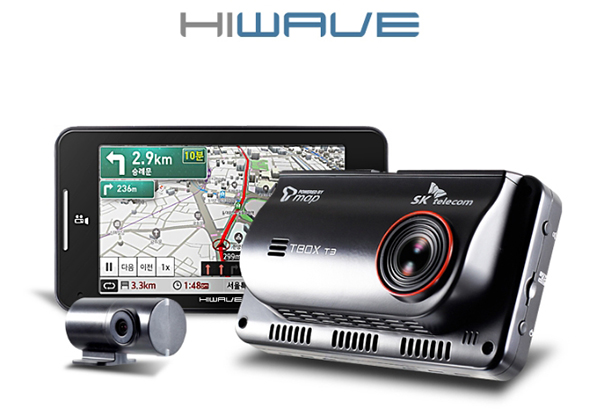
Whether delivered through a black box device installed in the diagnostic port of a vehicle or via a smartphone mobile app, telematics is beginning to make its mark in a number of other areas, including fleet management, stolen vehicle tracking, satellite navigation, and monitoring of youthful and elder drivers. In fact, the technology is shaking up business models as it moves into other insurance segments and entirely different industries.
So what is a common thread determining if a business is ripe for telematics? The business should have a need and ability to derive value from monitoring, predicting and/or facilitating consumer behavior in real time via geospatial and/or motion-oriented information.
By harnessing continuous streams of data through smartphones, embedded devices, wearables and even body sensors, telematics enables many types of businesses to capture and leverage individualized consumer behavioral and usage data when the consumer voluntarily opts in to such a relationship. This information can be used to analyze a person’s movement, environment, health, relationships, propensities, affinities and even psychological patterns—all in an effort to enhance, enrich and provide mutual benefit to the consumer-business relationship.
Consider life insurance companies: By leveraging a stream of telematics and motion-sensing-powered data voluntarily provided by an applicant or insured, they can gather information on sleep patterns, activity levels, heart rate, caloric output, blood glucose levels and more to better underwrite policies.
Imagine the value commercial fleet risk managers get from having actual data on a particular driver or a fleet of vehicles in real time that they can use to predict or adjust future activity. Think of the benefits nursing home operators obtain by having telematics detect when an elderly resident wanders away from an expected location or suffers a fall. And school bus supervisors can use telematics to get immediate feedback on the safety and efficiency of student transport.
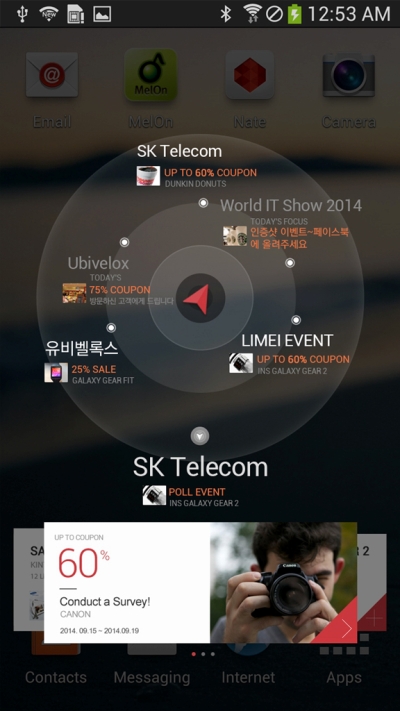
Perhaps the most widespread future vision for automobile telematics falls within the purview of marketing. Envision the potential of offering opt-in users—and perhaps others they are with—real-time discounts to restaurants or shops, or providing value-added information based on where and when consumers are shopping or traveling.
These services could attract new customers and restore previous ones. They also could enable more frequent customer connections, enhance loyalty and incentivize cross-sell and up-sell, as well as supporting a host of other high-value customer management actions.
Telematics helps firms that can get value from monitoring, predicting and facilitating consumer behavior in real time via geospatial or motion-oriented data.
Getting Past the Roadblocks
Telematics is fostering all sorts of revenue-growing or expense-saving activities—and it’s just taking off. Research firm SBD has forecast that 600 million cars will be fitted with embedded telematics by 2025 ("2025 Every Car Connected: Forecasting the Growth and Opportunity"), a more than tenfold increase from today. And that doesn’t account for the anticipated growth of app-based, consumer-friendly uses via the ever increasing population of smartphones.
While the opportunities associated with telematics are many, so are the potential challenges. In fact, telematics-driven growth and profitability are encountering their share of roadblocks.
Privacy concerns include one noteworthy obstacle, as well as downstream impacts that shift the consumer’s value equation to a less favorable position. Beyond early adopters, will large numbers of consumers allow insurers to monitor their driving behavior when there's a potential for price increases and not just discounts?
Will millions of consumers be comfortable allowing retail marketers to monitor their activity out in the world to entice them to enter their stores? Is some level of privacy invasion worth a 40 percent discount at the mall—or not? What about 30 percent? 20 percent? 10 percent? 5 percent? Or will consumers fear that data collected may be sold or stolen or used against them?
Operational issues should also be considered before a company goes all-in on telematics. The company should ensure that it is operationally fit for telematics initiatives in order to provide return on investment. Operational considerations include the following:
· Network and data processing capacity to facilitate accurate, reliable and timely data collection and transmission via mobile apps or black box devices;
· Adequacy of data management, warehousing systems, storage capacity and advanced analytics capabilities;
· Capabilities to provide customer service support, especially for value-added, telematics-driven consumer applications;
· Sufficient privacy and security policies and measures to reassure both consumers and regulators.
As the telematics era moves out of its infancy, the technology’s long-term implications are largely unknown. While telematics has a lot of moving parts and support functions, the return on investment from the technology can be significant if some reasonable business predictions prove accurate.
Telematics is disrupting industry paradigms and offering possibilities for new business models. As telematics kicks into high gear, businesses and consumers should be ready to adapt to and capitalize on these rapid shifts.
John Lucker is the global advanced analytics & modeling market leader for Deloitte Analytics. Follow him on Twitter (@JohnLucker) or email him at JLucker@deloitte.com.


 클릭하면 확대됩니다.